
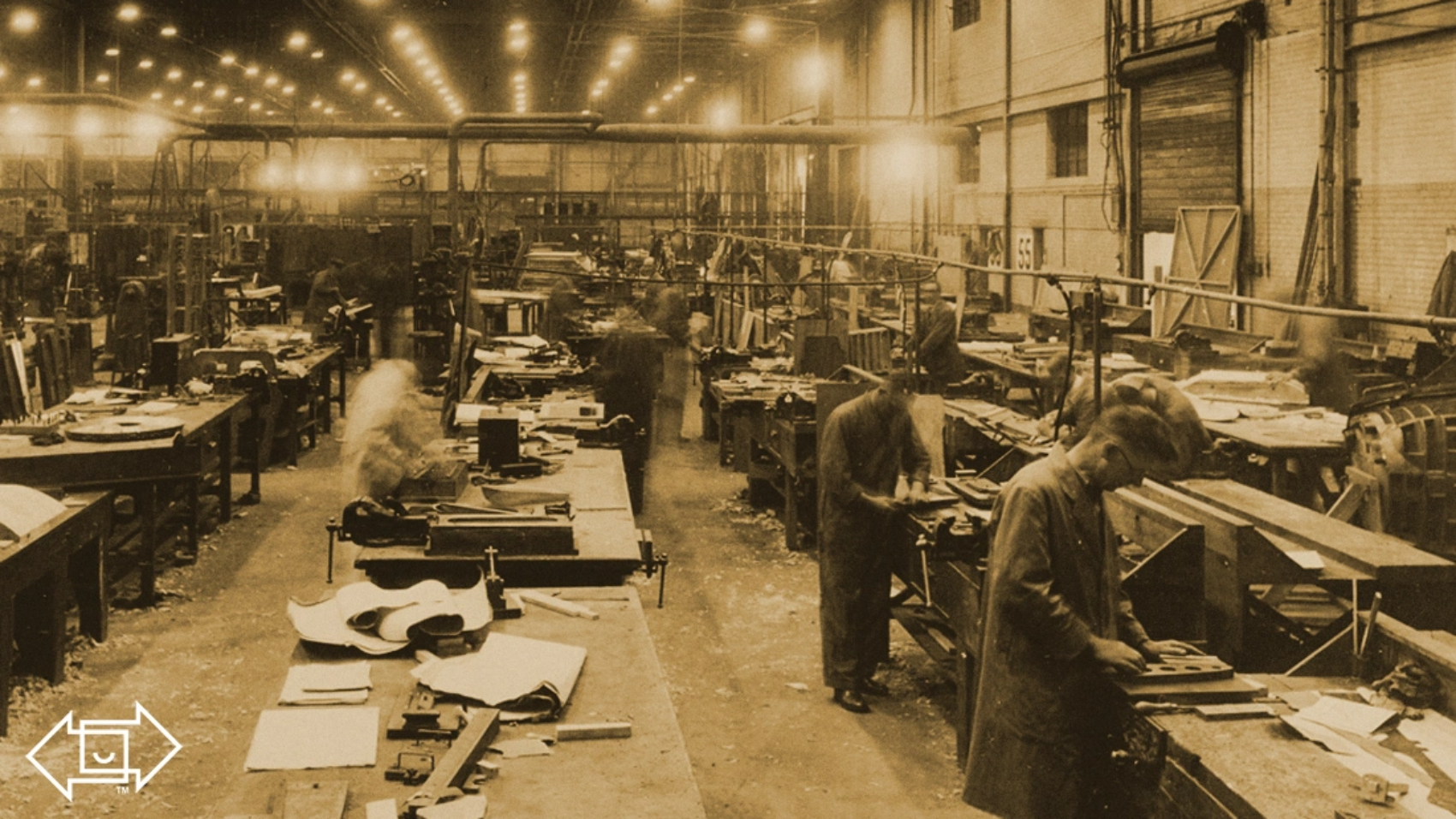
The Changing Workforce: A Brief History Guide of Work in America
The American workforce has transformed significantly over the past 250 years, evolving from home-based production to wage labor, factory systems, and modern scheduling technologies. Each era has shaped our views on work, independence, and opportunity.
Many current workforce challenges have historical origins. Leaders who understand this history are better equipped to anticipate changes in labor expectations and build more adaptable workplaces.
This article takes cues from Louis Hyman’s “A Timeline of Key Moments in the History of Work in America,” published in The Wall Street Journal. It summarizes major turning points in the history of work in America while expanding on how these events relate to contemporary trends in scheduling, employee expectations, and workforce flexibility.
How Early America Shaped Work Expectations
In the early days of the republic, most work happened within the home. Families created food, textiles, and other goods for their own use or for small-scale trade. While the Declaration of Independence promised equality, the economy was heavily dependent on enslaved labor in the South and indentured labor in the North. The contradiction laid the groundwork for the early history of work in America and shaped how labor was perceived.
By the early 1800s, the cotton gin spurred the growth of the Cotton Kingdom. Enslavers managed plantations as industrial operations, overseeing large labor forces. In the North, young women worked long hours in textile mills under strict schedules. These changes introduced centralized workplaces and standardized schedules, highlighting a divide between autonomy and control that still affects hourly workers.
Industrialization & the First Fight for Better Hours
The Market Revolution, spanning the 1820s to the 1860s, was a period of significant influence. Factories sprang up across the Northeast, and the concept of wage labor really took off. It was during this time that the first significant labor movement in American history emerged, centered on the push for a 10-hour workday, which began in 1828. Workers began to stand up against grueling hours, insisting that economic growth should enhance, not hinder, human well-being.
During this period, domestic service and clerical work also grew. Offices began creating new white-collar positions for young men, and eventually, young women joined the workforce as well. Immigrants filled the factories and service roles, while Native American communities, displaced from their lands, entered wage labor, impacting sectors like agriculture, railroads, and lumber.
By the time the Civil War rolled around, nearly four million people were still enslaved, their forced labor generating massive economic output. The Emancipation Proclamation in 1863 and the 13th Amendment in 1865 transformed the labor landscape, leading to new challenges around wages, land ownership, and personal autonomy.
Reconstruction to the Industrial Age: The Workforce’s Growing Pains
The late 19th century ushered in large corporations and tougher industrial conditions. Strikes became a common sight as workers fought for fair pay and safe working environments. Major events like the Great Railroad Strike of 1877, the Homestead Strike of 1892, and the Pullman Strike of 1894 marked significant moments in American labor history. Reforms were slow to come, and violence often erupted.
Simultaneously, the office environment was continuingly developing. Between 1900 and 1930, clerical jobs surged. Women began taking on roles in typing, filing, and various administrative tasks, marking a cultural shift from the factory floor to the office desk.
Efforts to protect workers gained momentum. The tragic Triangle Shirtwaist fire in 1911 led to the implementation of important safety regulations. By 1916, the push for an eight-hour workday had finally paid off for railroad workers.
Furthermore, during World War I, labor shortages opened the door for more women and African Americans to step into industrial jobs, leading to significant demographic shifts that would reshape the workforce for many years to come.
The New Deal and Postwar Stability
The Great Depression was one of the toughest periods in American labor history. Millions found themselves out of work, and countless families were uprooted. In response, the New Deal introduced the Wagner Act, which provided protections for unions, and the Fair Labor Standards Act, which set a federal minimum wage and prohibited child labor. These laws laid the groundwork for the labor standards we know today.
After World War II, the United States experienced economic stability. Unions flourished, wages went up, and many workers enjoyed long-term job security. The 1950 Treaty of Detroit linked wages to productivity, supporting middle-class growth. Public sector unions strengthened, and civil rights movements broadened the definition of workplace equality.
The Shift to a Flexible & Precarious Workforce
The 1970s and 1980s brought about significant transformations. Free trade agreements, automation, and globalization led to manufacturing jobs moving overseas. Strikes became less common, and many companies began scaling back their union presence. The service industry grew, but often at the cost of lower wages and fewer benefits.
In 1981, the Reagan administration took a hard stance against the air traffic controller strike, marking the beginning of a new era with weaker labor protections. By the 1990s, jobs in warehouses, retail, and logistics became the norm. Walmart emerged as the nation’s largest private employer, setting the standard for low-wage labor and scheduling practices.
The early 2000s introduced algorithmic scheduling, which used software to optimize labor needs for businesses. Unfortunately, these systems rarely took workers’ needs into account. Many found themselves dealing with unstable hours, erratic schedules, and obstacles to securing full-time employment. The trend impacted retail, warehousing, hospitality, and food service.
The gig economy accelerated this shift even more. Companies classified workers as contractors rather than employees, reducing access to benefits.
A Turning Point in Modern Workforces
The workforce today is constantly changing. The pandemic really brought to light the essential workers who kept things running on-site while many others transitioned to remote jobs. The tight labor market of the early 2020s gave employees bargaining power not seen in decades.
We saw unions spring up at places like Amazon, Starbucks, and Apple, while Hollywood workers rallied for protections against the impacts of digital and AI advancements. Younger generations are increasingly prioritizing flexible schedules, autonomy, and a healthy work-life balance.
These changes reveal a consistent pattern: the history of work in America is a balance between control and freedom. Workers seek stable hours, fair pay, and equitable treatment, while employers focus on efficiency and reliable staffing. Modern tools now offer opportunities to meet both needs.
Understanding Our History Matters
Today’s workplace challenges are longstanding, but modern technology enables leaders to address them in new ways. Flexible scheduling, rapid communication, and employee engagement strategies help organizations support hourly workers and maintain efficiency.
Platforms like ShiftSwap™ reflect lessons from America’s labor history. While technology cannot replace effective leadership, it offers leaders better staffing insights and gives employees more control. Organizations that prioritize flexibility, communication, and autonomy will remain competitive as labor markets evolve.
Understanding the history of work in America helps us make informed decisions today. It reminds us that work is always changing, and that the most successful organizations adapt to their people’s needs.
Start Planning for Success
Schedule a demo with ShiftSwap™ today and learn how to streamline your workforce management.